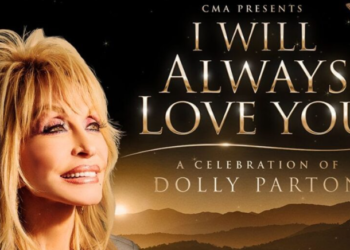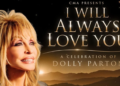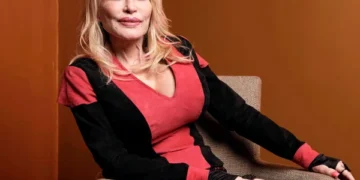


















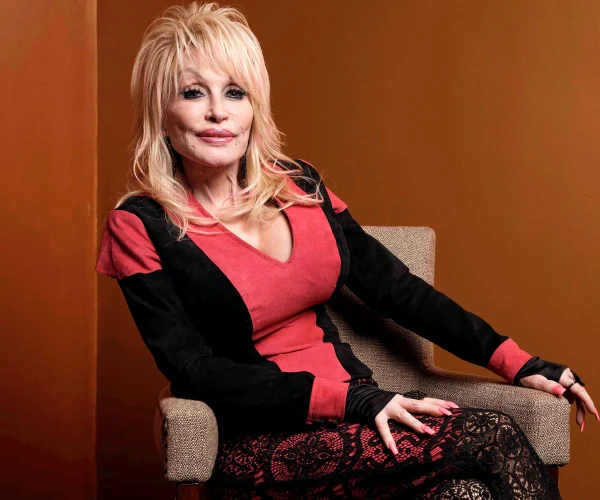
Dolly Parton, the country music legend beloved for her timeless songs and generous heart, has died.
Her family, issuing a statement through her nephew, Bryan Seaver, confirmed the news on Tuesday (August 25).
In a video message shared to Dolly’s official social media pages, Bryan said:
“I am representing the Parton and Owens family today announcing the passing of my aunt, Dolly Rebecca Parton Dean. Sister, sis, Aunt Granny to one generation and Gigi to the next.”
Bryan shared that Dolly had asked him, “years ago,” to make an announcement like this in the event of her passing. He had served as her head of security for over two decades.
Dolly Parton was around six when she wrote her first song: “Little Tiny Tasseltop,” an ode to her corncob doll with corn-silk hair. Her mother stored it preciously in a shoebox.
“I loved that little doll,” Parton wrote decades later. “I expressed myself and my feelings through writing – I’m sure what I was thinking was, ‘Well, Tasseltop has to have a song about her.'”
Parton never stopped making music after that. The irrepressible country music singer, songwriter and actress whose charisma, heartfelt lyrics and business acumen captured the public’s imagination for nearly six decades, died Tuesday at age 80, her family said in a statement.
She won 11 Grammy Awards, including a Lifetime Achievement Award.
With classic songs including “Coat of Many Colors,” “Jolene” and “I Will Always Love You,” she became one of the best-selling female artists of all time, with over 100 million records sold.
Parton’s wholesome personality, combined with her towering blond hairdos, flamboyant costumes and giddy delight at holding center stage, endeared her to Americans of all backgrounds and helped introduce country music to international audiences.
Over the years Parton hosted a TV variety show, starred in movies and even created a theme park, Dollywood, a popular tourist spot in her home state of Tennessee — all in addition to her lauded work as a songwriter.
But the quality that gave her enduring star power was her ability to connect with people. Coming from a self-described “dirt-poor” family, Parton often stood in as a symbol of the working-class American and regularly threw her name and money behind causes she believed in.
In response to the COVID-19 pandemic, Parton donated $1 million to vaccine research at Vanderbilt University in 2020, making her an early sponsor of Moderna’s vaccine development.
She conducted a literacy program for preschool children across the United States, as well as in Canada, the United Kingdom, Australia and Ireland, and provided scholarships to high school students in the Tennessee county where she was born.
The county erected a life-size statue of her in front of the courthouse in thanks, though she declined another proposed statue of her in Nashville in 2021, saying, “Given all that’s going on in the world, I don’t think putting me on a pedestal is appropriate at this time.”
It was this ability to stay true to her roots, combined with her drive to work hard and her nonpartisanship, that fueled her appeal among conservatives and liberals in a politically polarized America.
Dolly Rebecca Parton was born Jan. 19, 1946, in Pittman Center, Tennessee, and grew up in a one-room cabin in nearby Locust Ridge. One of 12 children of tobacco farmer Robert Lee Parton, her difficult childhood gave credibility to her often personal songs trilled in a distinctive soprano.
Her mother, Avie Lee, would sing constantly — songs from England, Ireland and Wales that told a story. “Mama had this haunting voice, and Lord you would feel it,” Parton wrote in her 2020 book “Dolly Parton, Songteller,” co-authored with Robert K. Oermann.