
































Why Is The Artemis II Rocket Launch So Significant?
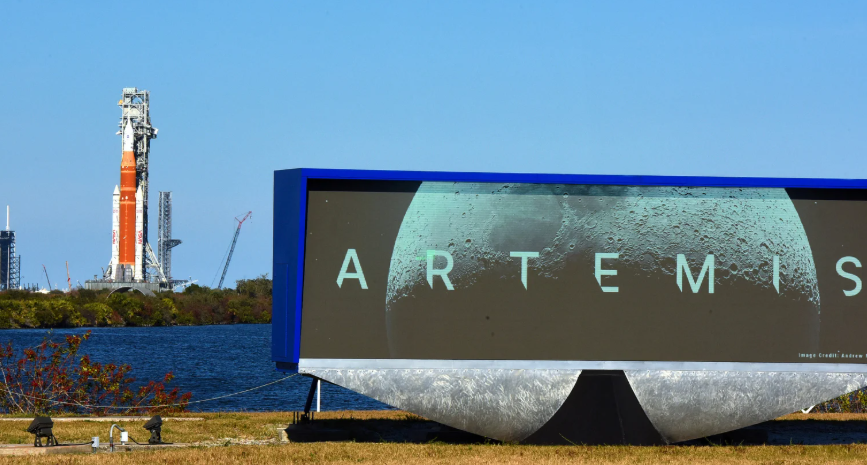
Later today (April 1st), the whole world will be watching as NASA launches a new rocket, Artemis II, into outer space.
Why is this rocket launch so significant? That’s because it will be NASA’s first crewed mission to travel around the moon in over 50 years.


Apollo 17 (launched in 1972) was the last manned mission around the moon.
Additionally, this is the first crewed launch utilizing NASA’s SLS (Space Launch System) rocket and Orion spacecraft.
Four astronauts form the Artemis II crew. They are NASA astronauts Reid Wiseman, Victor Glover, and Christina Koch, and CSA (Canadian Space Agency) astronaut Jeremy Hansen.
The crew members are making history on their own:
- Mission Specialist Christina Koch is the first female astronaut on a manned moon mission.
- Pilot Victor Glover is the first Black astronaut to go on a manned moon mission.
- Mission Specialist Jeremy Hansen is the first Canadian astronaut on a manned moon mission.
- Commander Reid Wiseman is the first person to serve as a commander of a manned moon mission in over 50 years.
NASA reports that the crew has been quarantined in the Astronaut Crew Quarters at Kennedy Space Center in Florida. Each astronaut has maintained a controlled sleep schedule and nutrition plan to prepare for today’s launch. They’ve also undergone a series of medical tests to confirm their readiness for their mission.
This section of our article is one of five containing important details about the Artemis lI launch! Keep reading to learn more…
Standing on the shoulders of giants.
As the Artemis II crew prepares for launch no earlier than April 1, they recently took a moment to pay homage to the Apollo 10 crew and the groundwork they laid for the Artemis II Moon mission. pic.twitter.com/uP8LpIDkcp
— NASA Artemis (@NASAArtemis) March 31, 2026
What Time Is The Artemis II Launch?
Artemis II’s targeted launch time is 6:24 PM EDT on Wednesday, April 1. According to CBS, the launch window will close at 8:24 EDT.
If the launch is delayed due to weather or other factors, the next available launch time will be 7:22 PM EDT on Thursday (April 2).
How Can I Watch The Artemis II Launch?
Live coverage and audio commentary of tanking operations for the launch started at 7:45 AM EDT on April 1.
Full coverage of the launch started on the free streaming platform NASA+ at 12:50 PM EDT. You can also check NASA’s social media platforms and YouTube channel for coverage.
Plus, major news outlets are expected to run coverage before, during, and after the launch. Make sure you’re tuned in before the 6:24 PM EDT launch time so you don’t miss liftoff!
If you’re in Florida, you might be able to see the launch in person. NASA sold viewing packages for spectators to watch the launch at Kennedy Space Center, and those packages have sold out.
But you don’t have to be at Kennedy Space Center to see the launch. If weather conditions are favorable, many people in Florida and Southeast Georgia may be able to see Artemis II as it travels into space. You can check the post below to view a visibility map from NASA.
Can you see our Moon rocket lift off from your backyard?
Skywatchers in Florida and southern Georgia will have a shot. Check out this map to see when you should look up! Artemis II is targeted to launch no earlier than April 1. pic.twitter.com/3WsJlEVufK
— NASA (@NASA) March 31, 2026
What Are The Weather Conditions Like For The Rocket Launch?
NASA reports that weather conditions have an 80% chance of being favorable for the rocket launch. Their “primary concerns” are cloud coverage and potential for high winds.
As mentioned previously, if weather conditions aren’t favorable or any issues arise during the pre-flight check, the launch will be postponed.
How Long Will The Artemis II Crew Be In Space?
USA Today reports that the Artemis II crew will embark on a 10-day mission around the moon before returning to Earth.
They will not be landing on the moon, but this mission is laying the groundwork to make a new moon landing possible in the coming years.