









































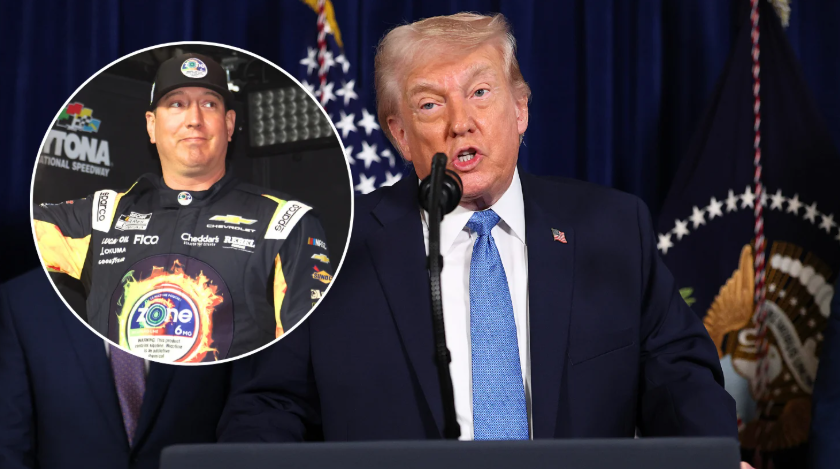
It’s been almost two weeks since two-time NASCAR champion Kyle Busch died at the age of 41.
It was determined that Busch died of sepsis, with his family telling ESPN, “The medical evaluation provided to the Busch Family concluded that severe pneumonia progressed into sepsis, resulting in rapid and overwhelming associated complications.”


While he had been battling the pneumonia for weeks, with symptoms appearing as a sinus cold, by the time he was taken to a hospital, sepsis had progressed and he died within 24 hours on May 21.
“More than 1.7 million people in the United States develop sepsis every year; at least 350,000 of them die,” notes End Sepsis, an organization devoted to ending deaths from this treatable condition.
Through Kyle Busch’s death, the public’s knowledge of sepsis has increased, and that’s something that the parents of a child who died of sepsis hope will lead to change.
Now, those parents have penned an open letter to someone they think can “make a difference for millions of Americans” regarding sepsis: President Donald Trump.
Read The Letter To The President
Ciaran and Orlaith Staunton founded the organization End Sepsis, which was established after the 2012 death of 12-year-old Rory Staunton.
In their letter to President Trump, they prefaced their plea for change by looking to the recent death of Kyle Busch.
“[Busch’s] death is yet another painful reminder that sepsis does not discriminate,” they wrote. “It can strike the young and old, the vulnerable and the strong, ordinary Americans and world-famous athletes alike. It moves fast, often hiding in plain sight, and when warning signs are missed or treatment is delayed, the consequences are devastating.”
The Stauntons then added, “Despite being one of the leading causes of death in the United States, sepsis still does not receive the national attention it deserves.”
When the Staunton family lost their son, Rory, to sepsis, it was unexpected. He was taken to a hospital after an injury became infected.
However, in the case of Rory, sepsis was not tested for, and he was released to return home. He died shortly after, on April 1, 2012.
Since then, Rory’s Regulations were adopted in the state of New York, and End Sepsis reports that child mortality rates with sepsis have dropped 40% since.
Rory’s Regulations include:
- The screening and early recognition of patients with sepsis, severe sepsis, and septic shock;
- A process to identify and document individuals appropriate for treatment through severe sepsis protocols;
- Guidelines for treatment, including the early delivery of antibiotics;
- Suitable training, resources, and equipment for healthcare providers for quickly recognizing and treating sepsis in adults and children; and
- The reporting of all sepsis-related data to the New York State Department of Health for use in monitoring compliance and updating best practices.
In the letter to Trump, the Stauntons cite bipartisan efforts in Congress to “strengthen sepsis detection, education, and accountability across the healthcare system.”
They then say, “But America still needs a national call to action.”
Continuing, the Stauntons write, “Mr. President, few issues unite Americans more than protecting families from preventable tragedy. A major national sepsis awareness and education initiative — aimed at hospitals, healthcare workers, parents, schools, sports organizations, and the public — could save countless lives.”
Powerfully, they write:
“Imagine if every American parent knew the warning signs. Imagine if every emergency room rapidly screened for sepsis. Imagine if no family had to hear the words: ‘If only we had caught it sooner.’”
Turning to how Trump could make a difference, they write, “That could become one of the defining public health achievements of your presidency.”
Noting that “sepsis is a killer hiding in plain sight” that requires “education, urgency, and leadership” to confront, they conclude their letter, writing, “Mr. President, America needs leadership on sepsis now more than ever. This is your opportunity to make a difference for millions of Americans.”
As of June 2, President Trump has not directed HHS Sec. Robert F. Kennedy Jr. or other members of his cabinet, such as as NIH Director Dr. Jay Bhattacharya, to pursue the issue of sepsis.
Read their full letter to President Trump, here.
Learn more about Sepsis, and Rory Staunton, at the End Sepsis website.
Watch the Stauntons discuss the death of their son on the Today Show with Savannah Guthrie, here.